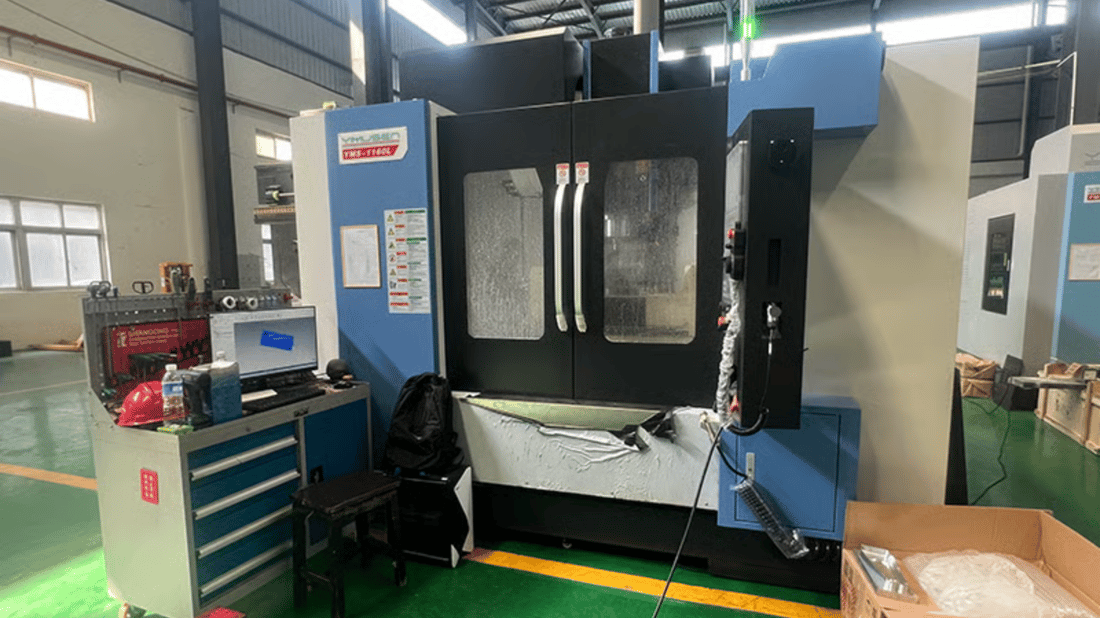
High precision vertical machining centers (VMCs) are advanced manufacturing machines designed for exact and detailed metalworking processes. These centers utilize vertical spindle orientation, enabling efficient and accurate milling, drilling, and cutting. Their high precision ensures tight tolerances, making them ideal for industries requiring detailed component fabrication such as aerospace, automotive, and medical device manufacturing.
Core Components Driving Precision
The accuracy of a high precision vertical machining center hinges on key components including the spindle, linear guides, ball screws, and control systems. High-quality spindle bearings and balanced design reduce vibration, while advanced linear guides and preloaded ball screws minimize backlash. Combined with CNC control units, these components maintain consistent precision and repeatability throughout production operations.
Applications in Aerospace Industry
In aerospace manufacturing, high precision vertical machining centers play a crucial role in producing components that meet stringent quality standards. Their ability to maintain micron-level tolerances allows for fabrication of critical parts such as turbine blades, engine components, and structural elements. This reliability ensures safer, more efficient aircraft performance and compliance with regulatory requirements.
Advantages in Automotive Manufacturing
Automotive manufacturers benefit greatly from high precision vertical machining centers due to their high throughput and accuracy. These machines can handle complex parts like transmission housings, cylinder heads, and custom engine components with consistent quality. The combination of speed and precision reduces production costs, leading to enhanced competitiveness in the automotive sector.
Material Versatility and Machining Capabilities
High precision vertical machining centers offer unmatched versatility, capable of machining a wide range of materials including aluminum, hardened steel, titanium, and composites. Equipped with adaptable tooling and robust spindles, these machines easily switch between different materials without sacrificing precision. This flexibility supports various industry demands from prototyping to high-volume production.
Integration with Advanced CNC Control Systems
Modern high precision vertical machining centers are equipped with sophisticated CNC control software that enhances control, automation, and customization. Features like adaptive feed rates, real-time error corrections, and multi-axis interpolation improve machining accuracy and efficiency. Integration with CAD/CAM software streamlines programming, reducing setup times and human error during manufacturing.
Impact of Thermal Stability on Precision
Thermal effects can significantly influence machining accuracy, so high precision vertical machining centers incorporate advanced thermal compensations. Temperature-induced expansions are mitigated through machine design enhancements such as temperature-controlled enclosures, intelligent cooling systems, and thermally stable materials. These features maintain positional accuracy during long machining cycles.
Maintenance and Calibration for Sustained Precision
Routine maintenance and precise calibration are critical to sustaining the accuracy of high precision vertical machining centers. Regular checks of spindle runout, ball screw preload, and linear guide alignment ensure consistent performance. Implementing predictive maintenance and automated calibration routines reduces downtime and extends the machine's lifespan.
Economic Benefits of Investing in High Precision VMCs
Though initial costs of high precision vertical machining centers may be significant, their productivity gains and quality improvements offer substantial economic returns. Enhanced machining accuracy reduces material waste and rework, while faster cycle times increase throughput. Over time, these factors contribute to lower per-part production costs and higher profitability.
The Future of High Precision Vertical Machining Centers
Advancements in automation, artificial intelligence, and smart manufacturing are shaping the future of high precision vertical machining centers. Emerging technologies such as IoT connectivity and machine learning enable real-time monitoring and predictive analytics to optimize machining processes. As these machines evolve, they will further elevate manufacturing precision, flexibility, and efficiency.
Quote Inquiry
contact us